
 ™
™Systems integration
Moving data between operational systems on a schedule or on an event, with error handling that surfaces failures instead of silently dropping records.
Industries
Connecting the systems around a production or operations floor so the numbers arrive without someone assembling them by hand.
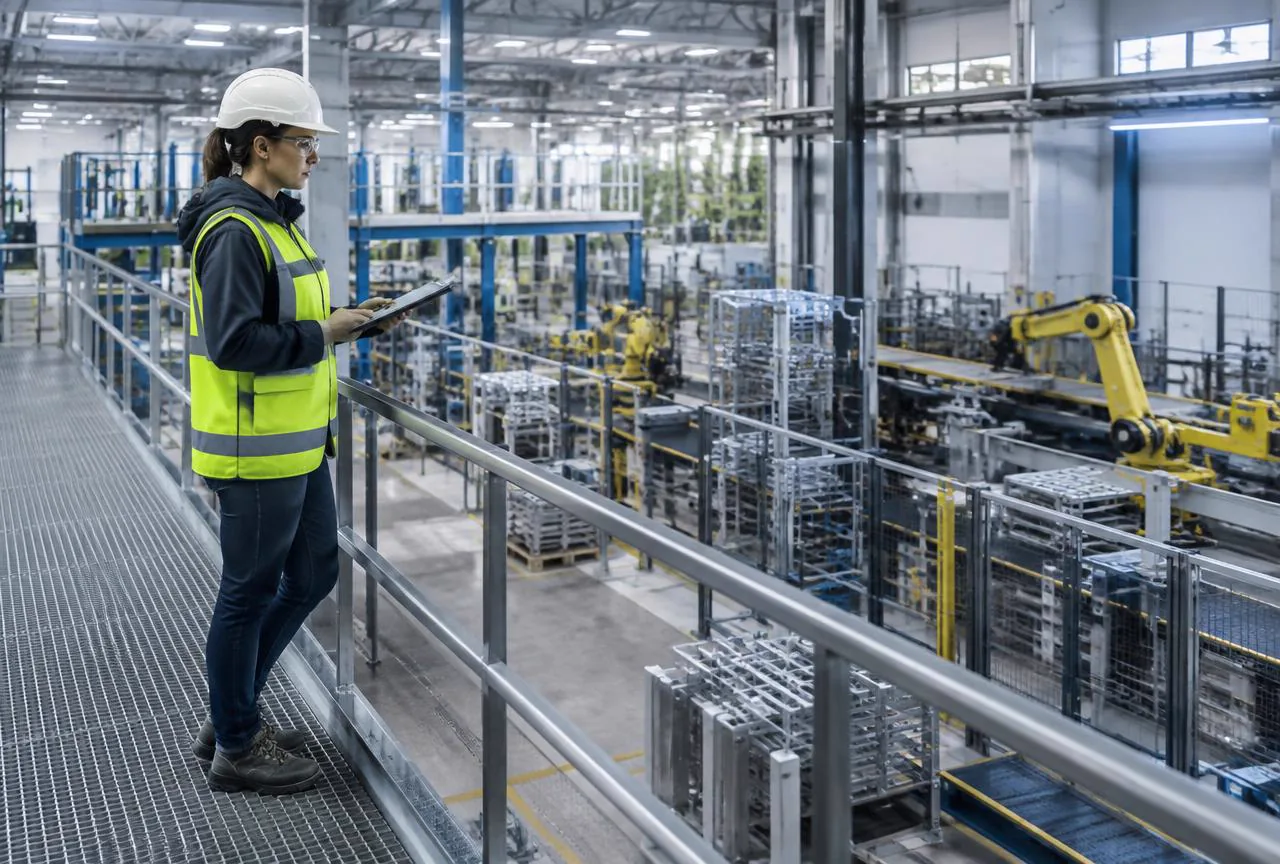
Industrial operations usually have no shortage of data. It sits in a maintenance system, a scheduling tool, a spreadsheet a supervisor maintains, and a reporting deck rebuilt every month. The cost is not storage, it is the hours spent reconciling.
Work here tends to start with integration and reporting, then moves to the tools people actually touch during a shift.
Moving data between operational systems on a schedule or on an event, with error handling that surfaces failures instead of silently dropping records.
One agreed definition of each measure, calculated in one place, so the weekly and monthly views cannot disagree.
Simple applications for capture at the point of work, usable on a tablet or phone, tolerant of poor connectivity.
Making manuals, procedures and past work orders searchable in plain language rather than by file name.
Operational environments have real limits: equipment that cannot be taken offline, systems with no modern API, shop-floor connectivity that drops, and staff who will not adopt anything that adds steps to a shift.
These are design inputs, not obstacles to be argued with. A tool that is ignored on the floor has no value regardless of what it does.
Describe where the manual effort is and what systems are involved.